What you'll learn
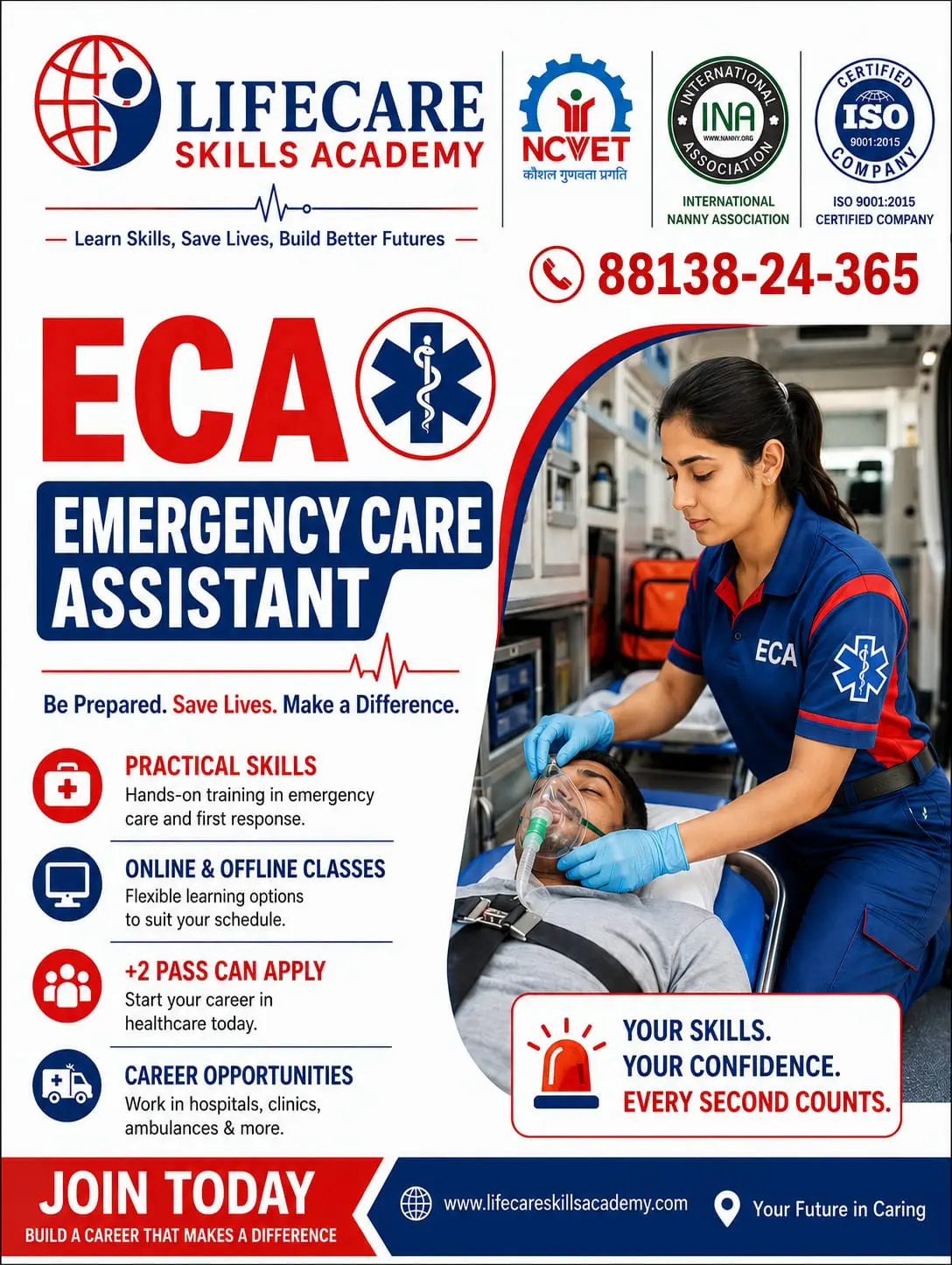
ECA: Emergency Care Assistant
NCVET Approved | NSDC Aligned | Digilocker Verified | International Recognition
- Emergency me first response dena
- Patient ko stabilize karna
- Ambulance support orhospital transfer karna
ECA professionals pre-hospital care eg. accident, heart attack, burns, poisoning,
🎓 Certification & Approval
✅ NCVET Approved
- Govt. of India skill certification system
- NSQF Level 4 (recognized qualification)
✅ NSDC (Skill India) Aligned
- Healthcare Sector Skill Council standards
- National level validity
✅ DigiLocker Verified Certificate
- Digital & secure certificate verification
✅ International Recognition
- Abroad jobs & healthcare opportunities
Show More
Course Syllabus
🔹 Module 1: Introduction to Emergency Care
- EMS (Emergency Medical Services) kya hota hai
- ECA ka role & responsibilities
- Ethics, legal aspects (consent, DNR, confidentiality)
- Safety of patient & responder
🔹 Module 2: Human Anatomy & Physiology
- Human body systems (heart, lungs, brain etc.)
- Basic structure & function of body
- Vital organs understanding
🔹 Module 3: Basic Life Support (BLS) & CPR
- CPR (Cardio Pulmonary Resuscitation)
- Airway management
- Oxygen therapy
- AED (Automated External Defibrillator
🔹 Module 4: Patient Assessment & Triage
- Scene assessment (site par situation check karna)
- Primary & secondary survey
- Patient triage (priority decide karna)
- Vital signs monitoring
🔹 Module 5: Trauma Management
- Bleeding control & shock management
- Fractures & musculoskeletal injuries
- Burns & wounds
- Head & spinal injuries
🔹 Module 6: Medical Emergencies Handling
- Cardiac emergency (heart attack)
- Respiratory emergency (breathing problems)
- Stroke (brain attack)
- Diabetes emergency
- Poisoning & overdose
🔹 Module 7: Special Cases Handling
- Pediatric (children) care
- Neonatal care
- Obstetrics & gynecology emergencies
- Elderly patient care
🔹 Module 8: Ambulance Operations
- Ambulance equipment handling
- Patient shifting techniques
- Emergency driving basics
- Communication with control room
🔹 Module 9: Infection Control & Safety
- PPE (Personal Protective Equipment) use
- Infection prevention
- Biomedical waste management
🔹 Module 10: Communication & Soft Skills
- Patient communication
- Team coordination
- Documentation & reporting
- Stress management
🔹 Module 11: Clinical / Hospital Training
- Hospital internship
- Real emergency exposure
- Case handling practice
Practical training + internship
🔹 Module 12: Employability Skills
- English communication
- Personality development
- Basic computer knowledge
 Bestseller